
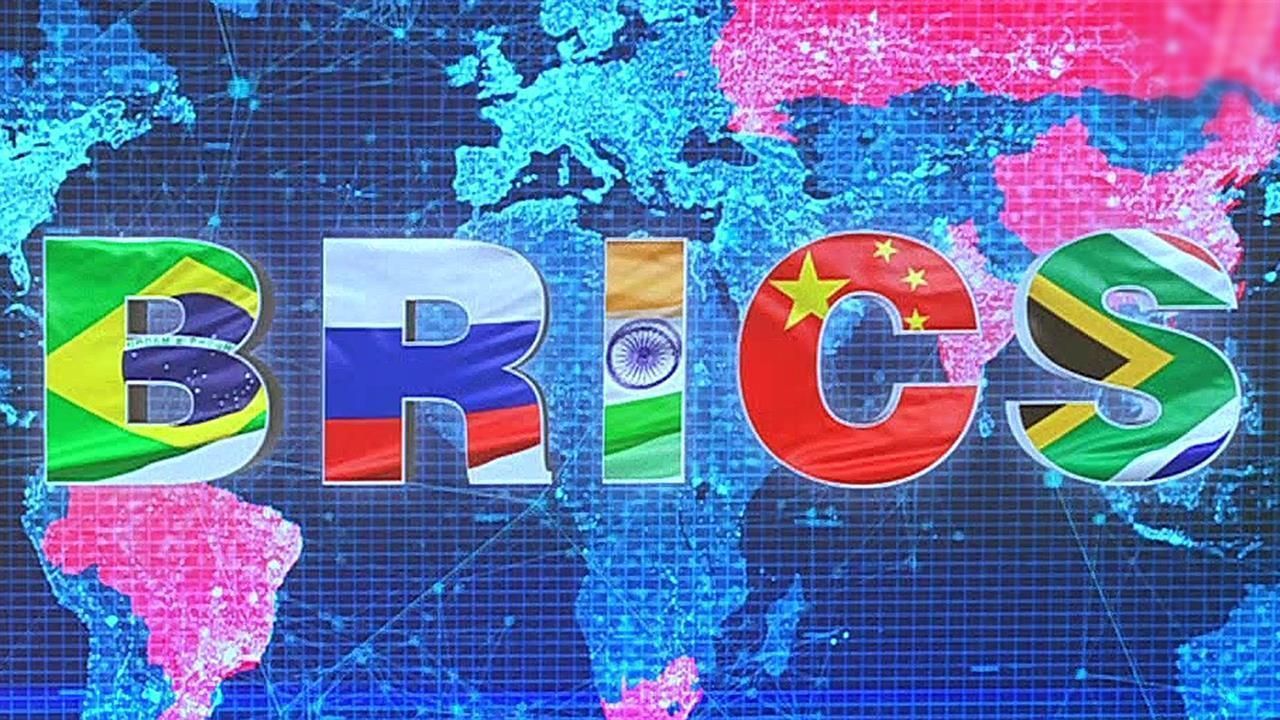
In conversation with the TASS Analytical Center: Marat Zembatov, Ph.D. in Economics, Director, Center for Interdisciplinary Studies, Institute of State and Municipal Management, Higher School of Economics.
— Political and economic discourse increasingly describes BRICS as a systematic attempt to build a new integrated world economic order. Is there any reason to regard an attempt on that scale as the only one of its kind—and what made it possible in the first place?
— In recent history BRICS has certainly not been a unique phenomenon on the road to economic multipolarity. Recall some of the other acronyms that stood for similar ambitions, several of which are heard far less often today: VISTA (a group covering Vietnam, Indonesia, South Africa, Turkey and Argentina), the Group of Eleven, or “Next Eleven” (Bangladesh, Egypt, Indonesia, Iran, Mexico, Nigeria, Pakistan, the Philippines, South Korea, Turkey, Vietnam), CIVETS (Colombia, Indonesia, Vietnam, Egypt, Turkey, South Africa) and MINT (Mexico, Indonesia, Nigeria, Turkey). All of them were attempts to break into the next tier of regional economies, where capital could earn a high return. The criteria for selecting the parties were much the same: population and resources, labor supply and inflows of foreign capital, relative political stability and urbanization.
— So before BRICS was created, the appearance of such groupings reflected, not least, capital’s search for geographically advantageous regions from which to extract profit? Can that trend be counted as one of the consequences—or one of the directions—of globalization?
— Yes, the birth of BRICS coincided with the last great wave of globalization. The centers of capital, technology and law remained in the old industrial countries. The peripheries of the capitalist world became production sites, raw-material bases and markets of future demand. Maritime trade grew up between them. Container lines were turning the planet into a single factory and a single shopping mall, consumption expanded, and technology looked like the natural companion of an expanding market. There was a good deal of cynicism in that picture, but there was clarity too. The owner of capital understood why he was going to China and India, to Mexico and Vietnam. He could see population size and the cost of labor, growth rates and expected effective demand. The weakness of the old infrastructure on the periphery of the industrial world was even attractive and full of promise: the lower the base, the higher the expected return on the next investment.
Over the past quarter-century the world has been through a series of crises, each of which stripped globalization of another layer of its self-assurance. The dot-com crash (that is, of companies whose business models rest entirely on operating online—TASS Analytical Center note) began after the NASDAQ peak in March 2000 and hit bottom in October 2002. Over that period the technology market lost more than $5 trillion in capitalization. It was the first heavy blow to the belief that a new technology turns, by itself and immediately, into a durable economic model.
The internet proved to be real, but the financial shell of the early internet boom burst. The mortgage crisis of 2007–2009 struck deeper still, at the very heart of capitalism. It began as a crisis of American credit but quickly turned into a global crisis of confidence in banks, in rating agencies and in the architecture of financial risk itself. In 2009 the International Monetary Fund put potential financial-sector write-downs on 2007–2010 assets at roughly $4.1 trillion. World stock market capitalization halved in 2008—the equivalent of $30 trillion in financial losses.
The pandemic showed that the global economy can now be brought to a halt not only by financial panic but by unprecedented shocks that are neither economic nor military. The International Monetary Fund put the world market’s cumulative losses from COVID-19 at roughly $13.8 trillion. This was the first global economic crisis in which borders closed, seaports came to a standstill and air travel disappeared. The transport component gave the crisis a further twist—supply chains for medical and pharmaceutical products turned out to depend on a mere handful of countries, and the advanced economies received vaccines and pharmaceutical support faster than the poor ones.
— Can the break in energy supply chains in 2021–2022 be counted as the next crisis in the sequence you are describing?
— Yes, the energy shocks at the start of this decade were the next blow to the familiar model of capitalism. In 2022, after demand recovered, after shortages of gas, coal and oil, and then after the rupture of the established energy supply chains that had linked Russia and the European Union for decades, the world’s consumer energy bill was set to exceed $10 trillion for the first time. Net income of the world’s oil and gas producers, on the International Energy Agency’s (IEA) estimate, could double to an unprecedented $4 trillion, against global subsidies for fossil fuel consumption at an unheard-of $1 trillion. This was a change of scale in which energy once again became the main brake on growth, a source of inflation and the gravedigger of fiscal and industrial policy—and of forecasts along with it, especially for developing economies.
— In this connection economic discourse increasingly uses the term “decoupling,” which originally meant the breaking of a rigid link between two or more dependent phenomena. In your view, did this sharpen with the build-up of international tension that coincided with the start of the special military operation? What new features have global economic ties acquired since hostilities began in Ukraine?
— The facts are these: the sanctions-driven ruptures of global geo-economic connectivity after February 2022, brought on by the sanctions pressure of unfriendly states, showed that even this was not the limit. The world economy entered a phase of acute decoupling—the unhooking of world economic ties, caused by unilateral Western political decisions of debatable motivation. Sanctions by unfriendly states and the restructuring of global trade that followed, the oil price cap and insurance restrictions, banking bans and re-export through third countries created a new price for interdependence. And severe fragmentation of the global trading system may today cost the world economy as a whole up to 7% over the long run, or around $7.4 trillion in today’s prices. And if the risks of technological decoupling materialize, losses for individual countries could reach 8–12% of GDP.
— Following the transport and logistics projection of decoupling brings us to the Strait of Hormuz, which appeared to have become a zone of relative calm after the United States and Iran agreed to end hostilities—but only until the first days of July.
— Yes, Hormuz is for now the latest chord in the geo-economic symphony of severed traditional ties. It exposed a vulnerability of the global market even harsher than the one revealed in the case of the Houthis. Only a couple of years ago some 20 million barrels of oil and petroleum products a day passed through the Strait of Hormuz—roughly 20% of world consumption of liquid hydrocarbons. The energy artery of the Strait of Hormuz fed the whole of Asia, above all China and India, Japan and South Korea. Modeling a complete short-term closure of Hormuz, according to calculations by specialists at our Center for Interdisciplinary Studies at the Institute of State and Municipal Management, Higher School of Economics, predicts a rise of roughly 12% in world oil prices, 5.4% in world energy prices and 2.75% in food prices. And if additional export routes were blocked at the same time (the Bab el-Mandeb, for instance), the price effect could double. For India and South Korea, short-term welfare losses in that model exceed 1% of GDP, and for the vulnerable countries of South Asia and Africa the blow would be harder still. Hence the present crisis in the Persian Gulf carries the risk of hunger from a physical shortage of fertilizer, of collapsing currency balances in the region’s exporting countries as revenue disappears, and of political instability among importers because of rising fuel and food prices.
— So if the logistical disaster caused by attacks on tankers in and around the Strait of Hormuz continues, can we speak of consequences on a global scale, not only for world energy supply but for world trade?
— It has to be said that on top of all these logistical, pandemic and financial crises, world trade has been fragmenting by stealth for a quarter of a century now. The slow stratification of the world economy into zones of trust, zones of risk and zones of forced detour is drawing a new map of geo-economic reality. The old model of globalization can therefore no longer rest on the advantages of scale, cheap labor and the free movement of capital.
Every new crisis shows that the chief scarcity of the 21st century is not capital alone. The chief scarcity today is reliable connectivity. There was a time when breaks in the world economy’s connectivity were treated “surgically.” But the world has now seen that simple solutions by force no longer produce the results they once did.
Recall that the barbaric destruction of the regime in Libya produced no durable regional reconstruction of productive forces. Another confirmation is the Houthis again: a small armed group in Yemen, with neither the economy of a technological power nor an ocean-going fleet, is forcing global shipping companies to change their routes and Egypt to count its losses on the Suez Canal. All of this demonstrates the need for a new approach to making capital work more efficiently in new conditions and within new models of integration.
— But global turbulence, which hurts developing countries more than industrial ones, is far more dangerous than decoupling, than the severing of ties…
— Yes, and the manifestations of the new geostrategic risks of what is already a “non-peaceful” time are visible everywhere. Last year we saw them on the border between India and Pakistan, between Pakistan and Afghanistan, between Myanmar and Thailand. This year has brought Venezuela and Iran, the crisis in the Red Sea, in Lebanon and in the Persian Gulf. These new conditions of hybrid conflict and variable connectivity force the world economy to operate on intermittent infrastructure.
— So what is the way out? To what extent can strengthening the mechanisms of interstate cooperation, BRICS above all, become an answer to challenges on this scale?
— What is needed today is, at the very least, a fresh attempt to forecast how the world economic order will develop. And that attempt must be fundamental, substantively grounded and stricter in form than the old lists of “promising markets.” The new BRICS cannot be built on analysis of GDP, demography and cheap labor alone. What has to be measured now is the marginal utility of investment in a geopolitical space where the decisive role often falls to non-economic factors. In a world where the importance of critical resources—rare earth metals, for example—has suddenly sharpened. In a world of new transport connectivity, where international corridors and energy, food security and big data are capable of holding countries within that new connectivity. And here, I am convinced, BRICS has considerable room for productive growth.
— How, in that light, would you formulate the interdependence and interconnection between the idea of BRICS progress and the slogan of multipolarity?
— I believe multipolarity can and must become the foundation of a newly constructed world of integration projects. And BRICS can and must remain its practical embodiment—not as a closed club and not as an ideological alternative to the world of the old global connectedness. BRICS matters as a unique platform where scale and resource base, industrial potential and political representation intersect in the most promising of the world’s growing sectors—the Global East and the Global South. After enlargement, the BRICS share of world GDP at PPP came close to 40% in 2024, while the G7 share of world GDP at PPP now stands below the 30% mark.
— So the weight of the individual member states of BRICS makes the comparison with other interstate groupings, the G7 included, favorable to this group of countries not only statistically but qualitatively…
— Here every member state of the grouping without exception contributes to the unique synergy of building a new world economic order. China gives BRICS its industrial support, its growing processing of critical mineral resources and its infrastructure framework. China’s container handling volumes have no equal in the world. And the ability to assemble value chains across enormously long freight routes in the Eurasian space and worldwide makes China one of the most powerful export-oriented economies in the world, if not the most powerful of all.
India contributes demography and a practically boundless ocean of labor resources worldwide. Its engineering corps and pharmaceutical industry, digital services and fast-growing space program make India one of the flagships of economic growth in the world. And for the transport corridors of Eurasia—in particular for our International North–South Transport Corridor—access to the Indian Ocean can bring incomparable advantages in building new supply chains free of the constraints of the traditional routes (the Suez Canal, for example). Brazil can supply the grouping with food and water, iron ore and critical minerals, bioenergy and an outlet to the South Atlantic. South Africa gives BRICS its African representation and mineral base, access to ports for routes around the Cape of Good Hope and to sources of unique mineral resources—diamonds, platinum group metals and much else.
Russia’s role in the architecture of today’s enlarged BRICS deserves a separate conversation. Our country is today no longer simply the world’s fourth-largest economy: simple arithmetic does not work in difficult times. Russia has grown into the role of guarantor of the world economy’s connectivity, while remaining a space of enormous potential that combines the instruments of energy sovereignty and food security, access to a resource base and great transit capacity for all friendly countries. And all of it rests on the solid foundation of the Russian scientific and technical tradition, on stability and on the wealth of its human capital.
In the original BRICS, the combined effort of Russia, China, India, Brazil and South Africa produced a winning aggregate economic result largely because of the uniqueness of their sectoral profiles. Together the BRICS countries create precisely the contour of global resilience that is most in demand today, against a background of numerous non-economic risks.
— At the same time many complain that, for all this impressive potential and its undoubted achievements, BRICS is not an institutionalized organization—the last time I heard that regret expressed was at the St Petersburg International Economic Forum, from the former Austrian foreign minister Karin Kneissl.
— That is all true—but BRICS is precisely at a crossroads now, facing a new stage of its development, the stage of institutionalization. The grouping already has one important institution: the New Development Bank. In 2024 it approved financing for 15 projects worth a combined $4.511 billion. The bank’s overall portfolio at the end of 2024 came to 105 projects with approved financing of $35.152 billion. Transport infrastructure was the largest area within it: 42 projects worth $13.958 billion. The future of BRICS depends on whether it can create project offices and settlement circuits for new investment projects, insurance mechanisms that are in demand and competitive, and verification standards. Then investment in food reserves, energy and the infrastructure of digital trust will carry the grouping to a new role in securing the prosperity of the global economy on the principles of construction and good neighborliness.
— And in this movement toward the institutionalization of BRICS, what place belongs to Russia, and why?
— Our role here is a special one, if only for historical reasons: Russia never had an ocean-going colonial system of the West European type, not in Africa, not in South Asia, not in Latin America. Russia never took part in creating overseas companies with an interest in the slave trade and in maritime control of trade routes. Russia’s engagement with the developing world is therefore free of the subjective dimension of a colonial burden of memory. And the world of new geo-economic connectivity now taking shape demands exactly this kind of foundation for engagement, one built on mutual trust. That trust is being born before our eyes within the contour of a growing BRICS. Because its time has come—the time of BRICS.
Alexei TURBIN, columnist, TASS Analytical Center
Source: https://dzen.ru
 Read next content