

Modern index use covers a wide range of applications
Transport and logistics indexes are quantitative indicators designed to assess the state of transportation across various routes, modes of transport, and other parameters. Depending on the objectives of the analysis, they can reflect the level of development of logistics infrastructure in individual countries, specific market segments (for example, the dynamics of container shipping rates for key international trade routes), or assess market conditions (such as surveys).
Transport and logistics indexes are divided into volume and price indexes, reflecting the physical and cost parameters of delivery, respectively. There are also qualitative indexes based on expert assessments or surveys. From an economic perspective, price indexes are the most practical, as they allow for the direct assessment of transportation costs and reflect market conditions.
There are various types of indexes, primarily price indexes and survey indexes (based on expert assessments). This study focuses primarily on price indexes, which also vary depending on the mode of transport, type of cargo, route geography, and, of course, methodology.
Dynamics of SCFI, July 2025 – July 2026
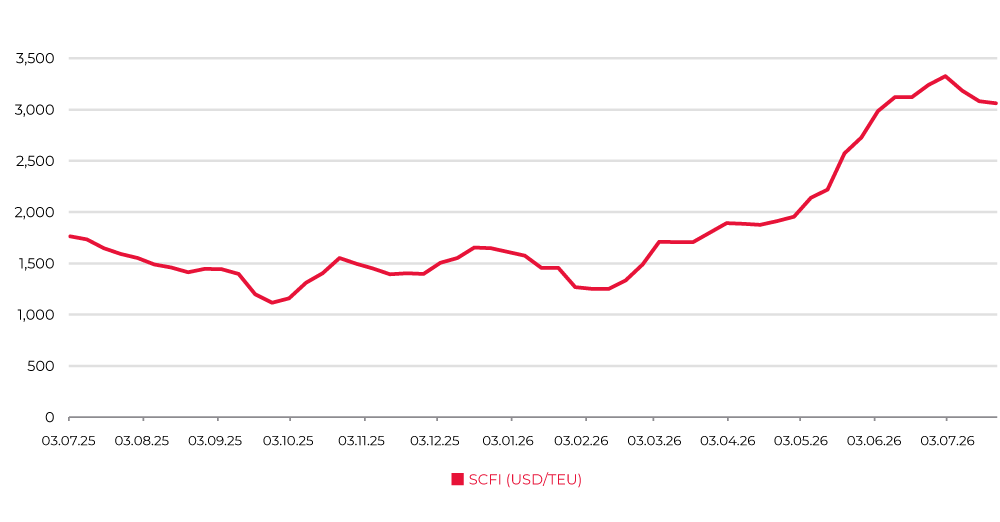
Source: Shanghai Shipping Exchange Institute (Prep.)
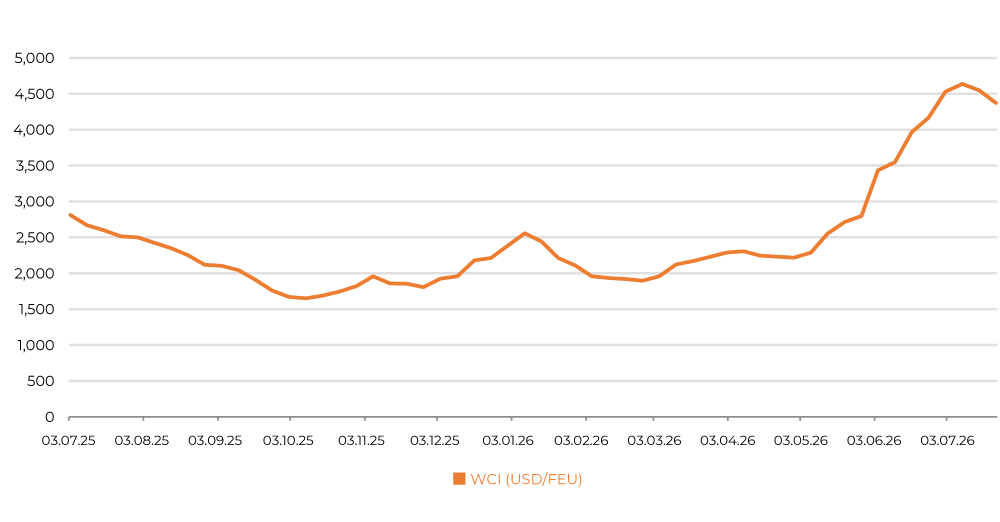
Dynamics of WCI Composite Index , July 2025 – July 2026
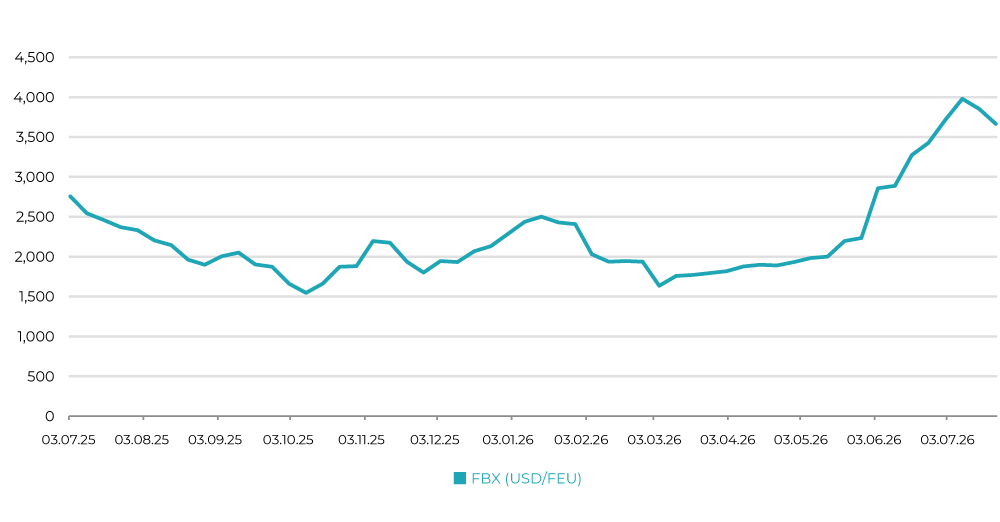
Dynamics of Global FBX, July 2025 – July 2026
Dynamics of XSI-C Far East – Northern Europe, August 2025 – July 2026
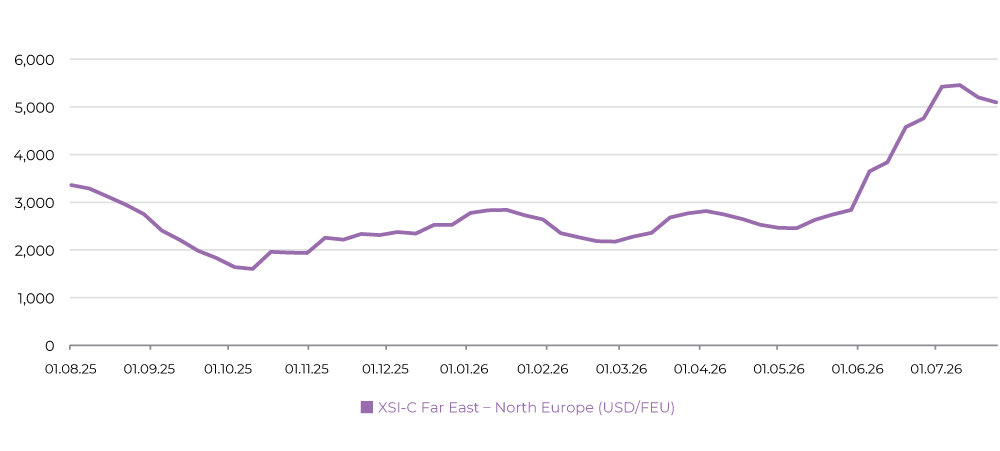
Source: Xeneta Shipping Index
Dynamics of NYFI ASIA - NEUR, August 2025 – July 2026
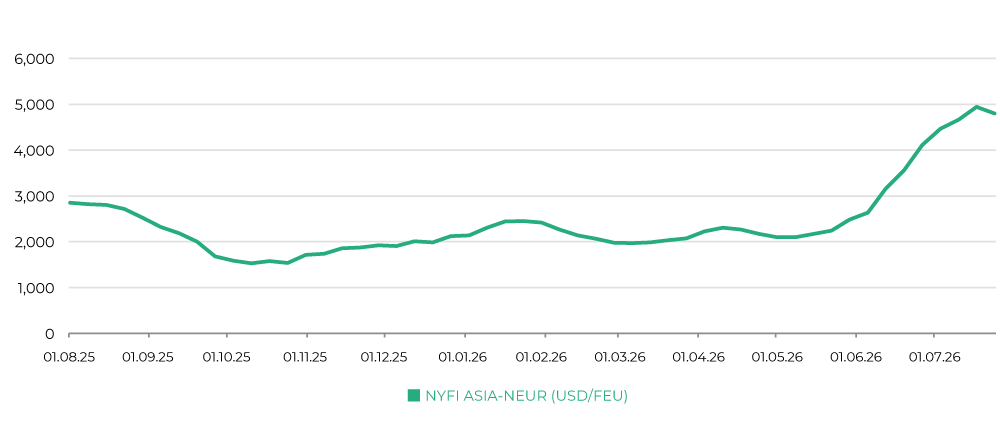
Source: The NYSHEX Freight Index
The use of standardized units of measurement makes transport and logistics indexes a universal tool for market analysis. In container shipping, the units of measurement typically used are twenty-foot containers (TEU) and forty-foot (FEU) containers. In the air transport sector, specialized units known as ULDs (Unit Load Devices) are used. However, to ensure comparability with other modes of shipping, the cost can be expressed in US dollars per kilogram or per metric ton.
Indexes play a particularly important role in benchmarking, allowing transport companies to assess the competitiveness of their rates (tariffs), and shippers to evaluate the efficiency of their logistics. In recent years, certain indexes have begun to be used to set rates for contracts, with freight costs automatically adjusted based on changes in a selected market indicator.
With proper development and the necessary demand, exchange-traded financial instruments can be set up based on a given index; for example, futures on transportation, the most famous of which are SCFIS (Europe) Futures, traded on the Shanghai International Energy Exchange (INE), which reflects actual rates for container shipping.
Another important function of logistics indexes is to increase the transparency of the transportation services market. The modern freight transportation market is characterized by intense competition among carriers. Logistics indexes are based on a large array of market data and provide uniform principles for assessing transportation costs, which is especially important for the positioning of individual services and routes.
Thus, transport and logistics indexes are an important tool for supporting management decisions, as they can reflect the general state of the transport and logistics market, individual routes and services, or even the mode of transport in a particular geographic region.
Understanding the significance of indexes and how they work is particularly important for the Greater Eurasia region. All countries in the region, particularly those susceptible to the «curse» of being landlocked or double-landlocked, are striving to develop continental routes. China’s rapidly growing economy and the emergence of one of the major axes of global trade—the China-Europe axis—have provided a unique impetus for the development of continental shipping routes, which now require their own indexes for global positioning, similar to the established maritime indexes— the SCFI and WCI.
Source: ERAI Read next content