
In conversation with the TASS Analytical Center: Marat Zembatov, Ph.D. in Economics, Director, Center for Interdisciplinary Studies, Institute of State and Municipal Management, Higher School of Economics, member of the BRICS Business Council Working Group on Infrastructure, Transport and Logistics.
— In economic and academic discourse, including on the development of BRICS, you often reach for categories such as decoupling and asymmetry when assessing the current state of the world economy. The first term describes the severing of established economic ties under the pressure of geopolitical realities. As for asymmetry — is it an unfortunate feature of the new connectivities emerging before our eyes, transport connectivity among them?
— An objective feature, I would say. Today’s conflicts differ substantially from the industrial wars of the past: they are network-centric and hybrid in character. Expensive infrastructure can be knocked out by a comparatively cheap drone; a small armed group is capable of redrawing the routes of the largest shipping companies. A single incident raises the insurance premium for hundreds of vessels that were nowhere near the site of the attack.
The confrontation between Iran and the United States, and the actions of the Houthis against Saudi and international transport infrastructure, show this asymmetry in full. The less technologically advanced participant is under no obligation to build a weapons system of comparable cost; it is enough to find a vulnerable node in the adversary’s expensive one. What is new is the scale, the range and the speed at which the effect of asymmetry spreads — not the effect itself.
Recall that the partisan war in Russia against Napoleon’s armies was already built on a mismatch of organizational models and costs: a regular army needed supplies, roads and a disciplined command system, while irregular formations drew on terrain, mobility and the cheapness of the individual operation.
Rudyard Kipling later put much the same thought into his 1886 poem “Arithmetic on the Frontier,” setting a British soldier trained at a cost of “two thousand pounds” against an Afghan jezail — the traditional long-barreled musket — worth ten rupees. The literary metaphor was in essence the economics of asymmetry: the cost of destruction turns out to be incommensurably lower than the cost of building and defending a complex system.
Today the jezail has been replaced by the drone. Instead of a soldier, the target is an oil terminal, a power station or a merchant ship. Through freight rates, the consequences of a single attack spread across the entire global economic system, with all its intricate machinery for passing the price burden on to the pocket of the ordinary consumer — through fuel prices, the bunkering of container ships, the insurance premium, costlier fertilizer and much else.
— Do you see a role for BRICS in overcoming the consequences of both decoupling and the asymmetry you describe?
— I would go further: the joint construction of infrastructure by the BRICS countries looks like the only effective non-military answer to the threats and challenges of the moment. The asymmetry of destruction loses its force where states agree not on carving up someone else’s market but on creating a common transport, industrial and educational space.
A constructive agenda does not mean an absence of competition. It means that competition takes place within an environment in which the participants have an interest in preserving routes, in the recognition of documents and in the compatibility of technologies. For BRICS this matters particularly. The grouping includes states with different political systems, sectoral specializations and geographies. Binding them together with a shared ideology would be difficult; binding them together with specific corridors, terminals, educational programs and joint research is far more realistic. This is one of the directions in which the work of the BRICS Business Council Working Group on Infrastructure, Transport and Logistics is developing. And today that work is acquiring a significance that reaches beyond a single industry.
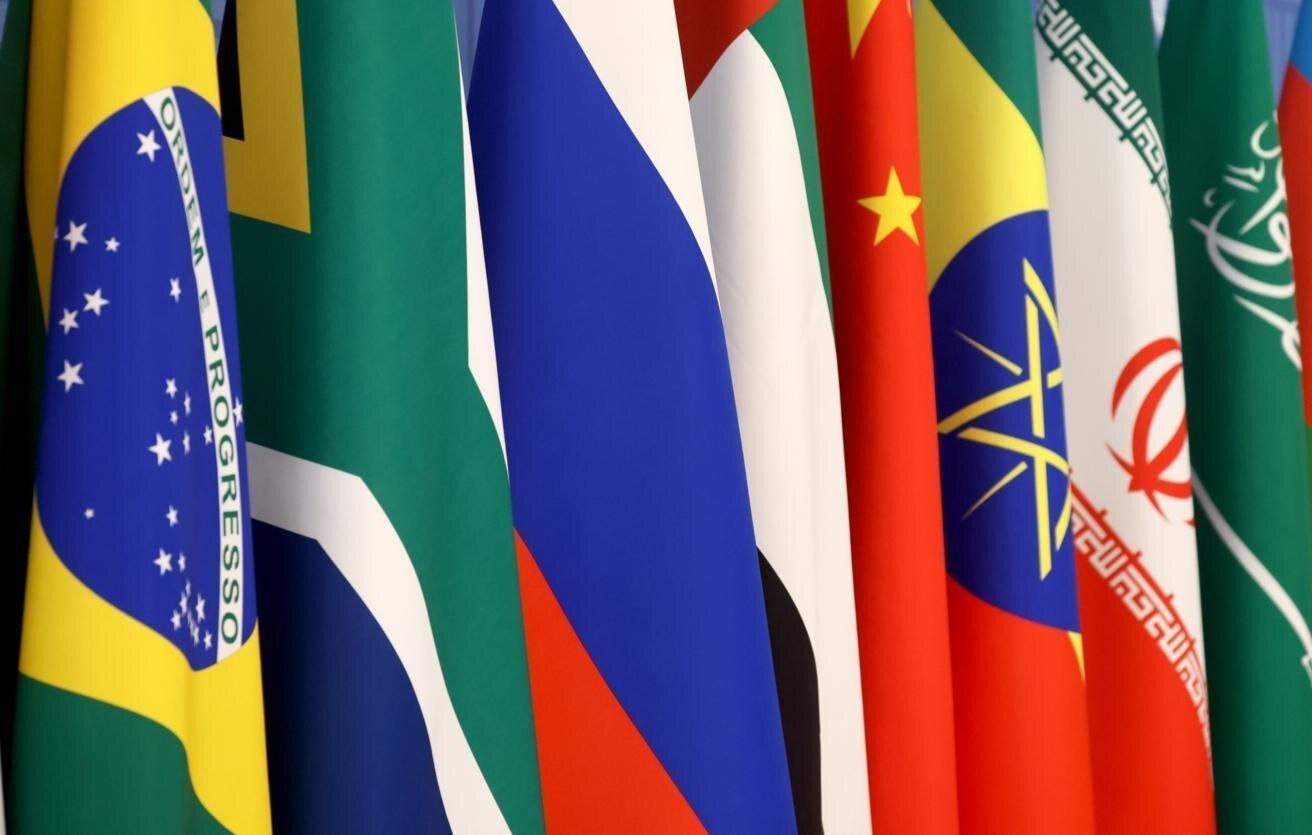
The BRICS Business Council is a standing mechanism for engagement between the business communities of the member states (Brazil, Russia, India, China, South Africa and, from 2024 to the present, Egypt, Iran, the United Arab Emirates, Ethiopia and Indonesia). The Council was set up to help develop trade, economic, investment and business ties between the member countries, and to produce recommendations on improving the business climate and removing barriers to mutual trade.
The BRICS Business Council is an advisory body with no powers of authority, but its proposals and reports are regularly submitted to the BRICS heads-of-state summits and are taken into account in shaping the grouping’s agenda.
The idea of a BRICS Business Council was first voiced in 2010 at the summit in Brasília, but its formal establishment came in 2013 at the Fifth BRICS Summit in Durban, South Africa. The memorandum creating the BRICS Business Council was signed on March 26, 2013.
The BRICS Business Council has a decentralized structure built around national chapters. The Russian chapter is coordinated by the Chamber of Commerce and Industry of the Russian Federation and the Russian Union of Industrialists and Entrepreneurs. It brings together the heads of the largest Russian companies, among them Rosatom, Rostec, Gazprom, Sberbank and VEB.RF. Sergei Katyrin, President of the Russian Chamber of Commerce and Industry, has chaired the Russian chapter since 2020.
For the key areas of cooperation the BRICS Business Council sets up working groups, among them financial cooperation; infrastructure, transport and logistics; energy; agribusiness; the digital economy; healthcare; education; and tourism.
— What is the BRICS Business Council Working Group on Infrastructure, Transport and Logistics, and how does it differ from an ordinary international discussion forum?
— The fundamental difference is that the BRICS Business Council combines the corporate and the governmental levels of cooperation. The working group brings together companies, development banks, infrastructure operators, industry associations and research organizations. They can first identify a problem at the level of delivering a specific logistics service, then frame a generalized proposal and pass it to governments for application in similar situations.
In 2025 the BRICS Business Council Working Group on Infrastructure, Transport and Logistics had 198 members. It was headed by Natanael Mota of Brazil, with Sergei Pavlov, First Deputy CEO of Russian Railways, as Russian co-chair. The leadership also included representatives of India, China, Egypt, South Africa, the UAE and Iran.
The Brazilian presidency set out the results of the Business Council’s work as 18 recommendations and 47 initiatives received from the private sector. For the Infrastructure, Transport and Logistics group the outcome consisted of two recommendations, four specific public policy measures and a separate initiative called the Global Logistics Platform. The platform, proposed by the UAE, is to bring together business, government agencies and research organizations, to support the exchange of data and knowledge, and to help shape new trade corridors.
— Turning to the recent past: what part did Russia’s 2024 BRICS presidency play in shaping the group?
— Russia effectively created a permanent transport and logistics circuit inside the Business Council. A specialized subgroup, overseen on the Russian side by Russian Railways, began work in early March 2024. By the end of the year it had brought together representatives of more than a hundred relevant organizations from the BRICS countries. The work proceeded along several lines at once, and the participants formed a common view of the principal routes. They began preparing the Review of Transport Barriers, built the BRICS Transport information platform and launched the BRICS Transport Academy. A project portfolio was taking shape in parallel.
As a result, representatives of transport companies identified 37 projects capable of improving the grouping’s logistics connectivity. The terminology has to be chosen carefully here: this does not mean that all 37 projects received financing or were given the status of construction projects. They were identified as promising initiatives for further study.
The project portfolio did not appear out of nowhere. By the close of the Russian presidency the transport and logistics subgroup comprised more than 100 relevant organizations. Over the first 11 months of 2024, traffic on the Russian Railways network to and from the BRICS countries reached 273 million tons, up 6.2% year on year. China accounted for 160.2 million tons (+8.6%), the UAE for 58 million tons (+23%), Brazil for 19.2 million tons (+17.3%), Saudi Arabia for 3.9 million tons (+44%) and Iran for 0.7 million tons (+10.1%). That, you will agree, is an already existing cargo base against which the demand for projects can be assessed.
This is precisely where the methodological value of the Russian presidency lies: a sequence was created for putting initiatives into practice, running from a planned or operating route to an understanding of existing or potential barriers, then to a project for overcoming them and on to a practical test of whether that project works. Six such routes were identified in all.
— What are the six BRICS routes singled out by the working group?
— At bottom this might resemble the Pan-European Transport Corridors, work on which began in the 1990s to connect the countries of Central and Eastern Europe with the states of the European Union. But no — these are not simply isolated roads; the work here is on a far larger scale and has many more levels. These are six groups of transport routes covering the main geography of the BRICS grouping’s links. The first group is tied to the North–South Corridor and its extension toward India, the states of the Arabian Peninsula and Africa. The second is the Eurasian East–West axis, including the rail links between Russia and China.
The third group of routes runs through the ports of the Azov–Black Sea basin. The fourth links the ports of Russia’s Northwest, the Northern Sea Route and the markets of China, India, the UAE and Brazil. The fifth takes in international shipping lines between Asia, Africa, the Middle East and Latin America. The sixth represents a prospective system of trans-African routes, which for now requires deeper technical and economic study.
A classification of this kind produces an entirely new way of looking at the map of future transport connectivity. And the principle the working group is building into the alignment of these six routes is this: the more combinations of rail, sea and road transport a cargo has available to it, the smaller the damage from the closure of any one strait or port.
The Review gave that map a quantitative dimension. For the Russian part of the infrastructure in 2023, the western branch of the North–South Corridor carried 8.0 million tons, with potential of up to 20 million tons by 2028. The Eastern Operating Domain handled 150.5 million tons, and its planned carrying capacity was 210 million tons by 2030 and 270 million tons by 2032. The Russian approaches to the ports of the Azov–Black Sea basin carried 98.6 million tons, with potential of 152 million tons by 2030; the approaches to the ports of the Northwest carried 166.4 million tons, with potential of 220 million tons. These are the parameters of the Russian infrastructure segment of the routes, not the total freight turnover of the whole BRICS space. But they are what makes it possible to pinpoint bottlenecks and gauge the scale of expansion required.
Incidentally, since I have mentioned the pan-European routes: for rail transport they have the advantage of a single 1,435 mm gauge across continental Europe. But we in Russia and the CIS countries have an advantage of our own. We are all part of the 1520 rail space. That means the gauge is the same width — 1,520 mm — in Russia, Belarus, Kazakhstan and Uzbekistan, Azerbaijan and Armenia, Tajikistan and Kyrgyzstan. And so there is no need to change wagon bogies at border interchange points, which means the speed at which freight moves does not fall. Each BRICS country has its own gauge, of course. Iran, China and the UAE, like Europe, have 1,435 mm, and India has 1,676 mm. But here, in the case of countries separated by sea, this matters rather less for commercial cargo, because the shift from land to sea transport requires transshipment in any case.
— What did the work on the Review of Transport Barriers involve?
— The participants tried to move away from a general sense that infrastructure is lacking and to classify specific obstacles. Physical barriers are sections with limited throughput, a shortage of terminals, differences in track gauge, and the condition of ports and border crossings. Non-physical barriers are the absence of a single end-to-end electronic document and the need to re-file cargo paperwork when the mode of transport changes, insurance restrictions and differences in veterinary and phytosanitary procedures, along with payment difficulties and a lack of information about the route. It is the non-physical barriers that sometimes cost more than building an additional track.
In 2025 the recommendations began to be tested in practice. Russian Railways, FESCO, PhosAgro and partner companies arranged trial container shipments to China, India, the UAE, South Africa and Brazil. The task was to run the route while “objectively recording the obstacles in the cargo’s path” — that is exactly how Sergei Pavlov, First Deputy CEO of Russian Railways and co-chair of the working group, put it. The results were to be used in updating the Review of Transport Barriers. Putting this approach into practice marked a crucial shift from expert assessment to an audit of an actual shipment.
The testing covered four of the six route groups. On April 22, 2025, a train of 76 containers of sawn timber set off along route No. 2 from Syktyvkar to Taicang in China via Nakhodka. On May 21 paper products were dispatched along route No. 1 to the port of Durban, South Africa. On June 1 FESCO sent containers from Novorossiysk to the Indian ports of Nhava Sheva and Mundra and to Jebel Ali in the UAE along route No. 3. In June PhosAgro shipped cargo to Brazil along route No. 4 through the ports of the Northwest.
In January–May 2025 as a whole, Russian Railways traffic with the BRICS countries came to 126 million tons, 4.2% more than a year earlier.
— How are the Business Council and the intergovernmental transport work of BRICS connected?
— They are two mutually complementary levels. The Business Council identifies what carriers need and turns that into project proposals. The intergovernmental working group agrees the principles, the international formats and the directions of sectoral policy. The joint ministerial declaration of the BRICS transport track, adopted in Nagpur, India, on July 11, 2026, established the Framework Program for Cooperation in Logistics and Supply Chains. The document’s central task is to keep the routes now taking shape safe, cost-effective and resilient.
The framework program provides for identifying gaps in the chains, sharing knowledge and developing international shipping cooperation. Particular emphasis is placed on local production of transport equipment, spare parts and critical components.
— Why does rail transport occupy such a prominent place in this work?
— The railway creates a land-based reserve of global connectivity. And rail links between countries have traditionally stood as the embodiment of reliable technical progress. The railway does not, of course, replace shipping or any other mode of transport. But it reduces dependence on those geographical and geo-economic features that can make the survival of a transport route hostage to a single strait, canal or coastal conflict zone.
Rail infrastructure is also built to last for decades. It requires compatibility of technical standards, of control systems and of professional training. That is why the creation of the BRICS Railway Research Network has more than scientific significance: it is a practical step toward bringing together railway administrations, research organizations and technology manufacturers.
For BRICS the ability to combine different national competencies matters especially. China has scale in construction and in equipment manufacturing. India runs one of the largest railway systems in the world and — together with China — one of the fastest growing in the world in terms of technical equipment. Russia has experience in organizing freight traffic and operating track in difficult climatic conditions. South Africa and Brazil have competencies in hauling bulk commodities. The research network therefore makes it possible not to duplicate development work but to adapt already proven solutions to the conditions of other participants.
— One gets the impression that railways play some special role for the countries you have named.
— You could put it that way. Multimodality is obviously inherent by definition in every efficient and successfully developing transport and logistics complex, yet each part of the global transport mosaic has its own strong suit — its own engine of progress, if I may put it so. In the age of the great migration of peoples, in the days when the Huns were marching on Rome, that engine was the stirrup — the ordinary stirrup, which allowed a rider to maneuver. In the age of the great geographical discoveries, an incomparable role was played by sailing ships with improved rigging, the classic example being the combination of square and fore-and-aft sails. Caravels of that kind were less dependent on the direction of the wind and did not lose speed. And in the age when capitalism was taking shape, railways eclipsed everything else in importance and in their contribution to connecting producers, sellers and buyers. The rapid economic growth of the United States in the 19th century is of course bound up with the development of rail links between the two oceans. Look at China today: a network of some fifty thousand kilometers of high-speed lines can only be called an engineering marvel. And as for the special role of railways for Russia, India and China — yes, that role exists. It lies above all in the fact that where transit potential on such a scale can be joined together, all other modes of transport lose something of their weight.
In other words, the self-sufficiency of the means of maintaining transport connectivity across Greater Eurasia, which could follow from combining our transport capacity, in rail in particular, will have no equal. Global maritime trade could yield to it in importance here, especially against the background of decoupling.
— Does the Business Council’s Working Group on Infrastructure, Transport and Logistics play any part in plans to lay new railways in the countries of Eurasia? The Trans-Afghan railway project, for instance, is being prepared for implementation in Afghanistan.
— BRICS is above all an informal and voluntary grouping. Its orientation toward the future does of course imply the possibility of designing infrastructure projects jointly. But state sovereignty — of BRICS members and of any other country — is unquestionably exercised in the sphere of strategic plans for transport infrastructure construction as well.
So if a request for expertise arises that matches the Business Council’s competencies, our working group can take part in such work in accordance with the norms of international law.
— What place does the BRICS Transport Academy occupy in this system?
— The Academy is one of the clearest illustrations of the constructive agenda. Infrastructure connectivity is impossible without connectivity of human capital.
You can build a terminal and buy equipment. But if specialists from different countries use different technological approaches, cannot make sense of each other’s documents and have no experience of managing a shipment together, physical infrastructure will not become the foundation of seamless logistics.
The BRICS Transport Academy began work in 2024, essentially as a Russian Railways project. It has been developing at an accelerating pace. By December 25, 2024,
the Academy had held seven open webinars, each drawing an average of 200–300 online participants, as well as an in-person placement in St. Petersburg for Chinese railway and logistics specialists on the East–West route. By June 2026, 15 master classes had been held, attended by more than three thousand people. Youth exchanges with India and the UAE are developing. Online classes, the training of railway specialists at Russian universities and visiting programs based at the University of Brasília are under discussion with Brazil.
But the main result, in my view, is not the number of webinars. An international professional environment is taking shape in which specialists are beginning to speak a common industry language. Education is the longest-term infrastructure investment there is. A road connects territories. The Academy brings together the people who will design and operate that road.
— What needs to be done so that the working group’s 37 projects do not remain a preliminary list?
— A permanent project office is needed. For each initiative the cargo base, the participants and the stage of readiness have to be defined. An indicative budget and a source of financing are required. And a measurable effect on the time, cost and reliability of shipment has to be established.
It is useful to divide the projects into three groups. The first is physical infrastructure: railways, ports, terminals and border crossings. The second is institutional infrastructure: unified documents, electronic certificates, insurance and payment mechanisms. The third is intellectual infrastructure: research, digital platforms and training.
The New Development Bank is capable of financing the first group. National governments must take part in the second. The working group, universities and the Transport Academy are able to develop the third.
— Can the working group become a platform open to more than just the largest corporations?
— It has to become one. Large infrastructure requires the participation of large companies and of the state. Yet many barriers are removed by solutions from small technology firms, research teams and industry associations.
Openness is also needed because the geography of BRICS keeps expanding. It is impossible to determine in advance everyone who will take part in a route. The format must allow a company or a research center to be brought in at the point when a specific task arises.
The point of the diversity of economic models and the polycentricity of the new world economic order now taking shape is not a mechanical multiplication of closed blocs. It is that the world economy should have several centers of decision-making and several trunk routes. Then the shutdown of one node does not lead to general catastrophe. The working group should be shaping a system of complementarity, not a system of isolation. The North–South Corridor does not cancel out the Suez Canal, the Northern Sea Route does not cancel out the traditional ocean lines, rail shipment does not cancel out the sea. All of them are meant to work together, creating reserve transport capacity to keep the world economy’s supply chains running without interruption.
— How, then, would you define the long-term mission of the BRICS Business Council Working Group on Infrastructure, Transport and Logistics?
— Its mission is to translate the diversity of economic models and polycentricity from a political concept into the physical reality of transport connectivity, into overcoming asymmetry under conditions of decoupling. A new world economic order without transport connectedness breaks up into isolated territories. A polycentric world with working transport corridors becomes a system of interdependent centers of development. And the working group is shaping the image of a shared future in which international cooperation is built around jointly created opportunities.
At the initial stage of any activity there are always plenty of new directions one would like to develop. And what can be seen here is prospects rather than problems. Realizing each of those prospects requires a clear ordering of priorities.
So it is fair to say that the working group has good prospects for development. One can only wish that its track always stays clear of braking factors, and that the switches guide it unfailingly toward well-calibrated goals — toward building a coherent system of transport and logistics meaning within the constructive agenda of BRICS.
— Does this mean the BRICS transport agenda is capable of becoming a center of crystallization for a more resilient world economic order?
— Precisely. Calm in the world economy does not mean the absence of competition or of conflicts of interest; it means the presence of institutions that prevent a single contradiction from destroying the whole supply system. BRICS is capable of becoming the center of crystallization for such a model if it keeps its focus on projects that matter in practice and are open to participation by all interested parties. Infrastructure has to be joined to financing, education to technology, and political declarations to actual shipments.
In a world where destroying connectivity has become technologically easy, creating it acquires a civilizational value of its own. This is exactly the work the BRICS Business Council as a whole is engaged in. It creates conditions in which a joint project is economically more advantageous than a rupture, and a shared route more valuable than an attempt to control the chokepoints of world logistics. And if the constructive agenda proves stronger than the logic of division through conflict, BRICS will be able to offer the world economy a more resilient way of organizing the global transport system.
TASS Analytical Center columnist Alexei TURBIN
- April 2026
- September 2026
- August 2026
- July 2026
- June 2026
- May 2026
- February 2026
- January 2026
- December 2025
- November 2025
- October 2025
- September 2025
- August 2025
- July 2025
- June 2025
- aprel-2025
- March 2025
- February 2025
- January 2025
- December 2024
- November 2024
- September 2024
- August 2024
- July 2024
- June 2024
- May 2024
- April 2024
- March 2024
- February 2024
- January 2024
- December 2023
- November 2023
- October 2023
- September 2023
- August 2023
- July 2023
- June 2023
- May 2023
- April 2023
- March 2023
- February 2023
- January 2023
- December 2022
- November 2022
- October 2022
- September 2022
- August 2022
- July 2022
- June 2022
- May 2022
- April 2022
- March 2022
- February 2022
- January 2022
- December 2021
 Read next content